Many people only think about healthcare when something goes wrong. That approach often leads to higher costs and delayed treatment.
In today’s healthcare system, people want something simpler, more personal, and easier to manage. That is where Direct Primary Care Benefits come in.
A common misunderstanding is that healthcare is only about treating illness. In reality, strong care systems focus on prevention, consistency, and long-term support.
This is where direct primary care changes the experience in a real way.
What Makes Direct Primary Care Different?
Direct primary care removes many barriers found in traditional systems. Instead of complex billing and short visits, it focuses on simple and direct care.
Many people searching for why to choose direct primary care are looking for more clarity in their healthcare.
Key points:
- No rushed appointments
- Direct access to your doctor
- Focus on prevention, not just treatment
- Simple monthly care model
- Better communication
- Easy follow-ups without long waiting systems
This model makes healthcare feel more human and less confusing.
Another important point is time. In traditional clinics, visits are often short. In direct care, patients usually get more time to talk about their concerns in detail.
That extra time often leads to better understanding and better care decisions.
Advantages of Primary Care in Daily Life
When people understand the advantages of primary care, they see how much it improves long-term health instead of only handling short-term issues.
Primary care is like a health base. It supports your body before problems grow.
Main benefits:
Benefits of strong primary care include:
- Early detection of health issues
- Better tracking of health history
- Lower emergency visits
- Strong doctor-patient relationship
- Ongoing health guidance
- More personalized care planning
These advantages are also why many organizations view accessible healthcare as an important part of their Employee Healthcare Benefits strategy.
Primary care is not only about sickness. It is about staying ahead of problems before they get serious.
For example, small symptoms like fatigue or mild pain are often ignored. A good primary care system helps catch these early signs before they turn into bigger conditions.
Role of a Family Doctor in Long-Term Care
A trusted family doctor benefits approach supports both individuals and families.
Instead of switching doctors often, patients build a long-term relationship with one provider who understands their history.
Why it matters:
- One doctor for the whole family
- Better understanding of medical history
- Easier care for kids and adults
- Consistent follow-ups
- Long-term trust building
- Faster decision-making during illness
Families often feel more secure when care is connected instead of scattered.
A family doctor also notices small changes over time. These patterns help in early detection and better treatment decisions.
Long Term Care and Health Stability
Good healthcare is not only short-term treatment. It is also about stability over time.
That is where long-term care benefits become important.
Key points:
- Chronic condition support
- Regular monitoring
- Reduced hospital visits
- Better lifestyle guidance
- Stable health management
- Better medication tracking
This is especially important for people with conditions like:
- Diabetes
- High blood pressure
- Asthma
- Heart issues
Instead of reacting to problems, long-term care focuses on control and prevention.
Over time, this can improve overall well-being and quality of life.
Preventive Care Makes a Big Difference
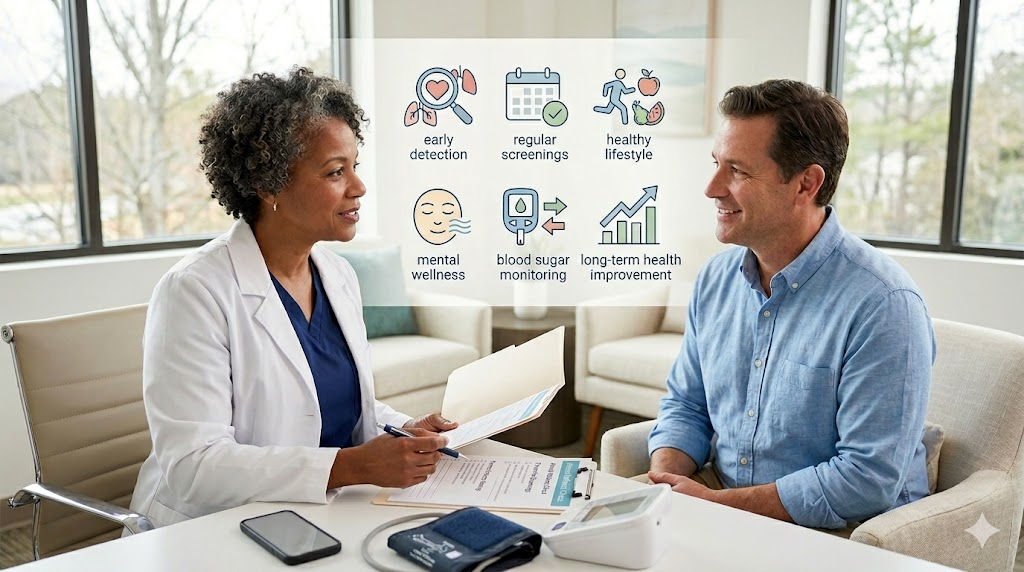
One of the strongest parts of this model is prevention. Instead of waiting for illness, care starts early.
Preventive care advantages:
- Catching issues early
- Avoiding expensive treatments
- Regular screenings
- Lifestyle guidance
- Mental wellness support
- Better long-term health outcomes
Preventive care is simple but powerful.
Many people only visit a doctor when they feel sick. But small checkups can prevent major health issues later.
Even basic screenings like blood pressure and blood sugar checks can make a big difference over time.
Key Benefits of Direct Primary Care
Direct primary care offers simple but strong benefits for daily life:
- Easy access to doctors
- Longer consultation time
- Strong focus on prevention
- Better family health tracking
- Simple and clear pricing model
- More personal attention
- Less waiting time
- Faster follow-up support
- Better understanding of health history
- Greater comfort during visits
This system removes many barriers people face in traditional healthcare.
At Harvest Health MD, patients are now exploring care models that focus more on relationships, prevention, and easy access instead of rushed visits.
Practical Insights
Many people still follow old habits when it comes to healthcare.
Common mistakes people make:
- Waiting until symptoms get worse
- Switching doctors too often
- Ignoring preventive checkups
- Not tracking medical history
- Avoiding routine visits
What people misunderstand:
- Primary care is not just for sick visits
- More visits do not always mean better care
- Insurance-based systems are not the only option
- Small symptoms should not be ignored
How to avoid issues:
- Keep one consistent doctor
- Focus on preventive visits
- Build a long-term care relationship
- Ask questions during visits
- Track health changes over time
Small changes in behavior can improve long-term health results.
Expert Perspective
Good healthcare works best when it is stable, simple, and consistent.
Doctors who know a patient over time can:
- Spot changes faster in daily health patterns
- Understand patterns in health and lifestyle habits
- Give better long-term guidance based on the full history
- Avoid repeated testing and unnecessary steps
- Provide more accurate care decisions with context
This connects strongly with daily health tips, where small habits play a big role in long-term wellness.
This is one reason direct care models are becoming more popular in family healthcare settings, especially for people looking for why to live a healthy lifestyle and long-term stability in care.
Over time, this kind of care approach helps reduce confusion, improve trust, and support better preventive action through preventive health tips and regular guidance.
Why Does This Model Matter Today?

Healthcare today is often busy and rushed. Many patients feel like they are just another number in a long system, which can make care feel less personal.
Direct primary care changes this by:
- Giving more time per visit so patients
- Improving communication between doctor and patient
- Reducing confusion about treatment plans and next steps
- Making care more personal and focused on real needs
- Helping patients feel heard and understood during visits
- Building stronger trust between doctor and patient over time
It creates a stronger connection between doctor and patient, which leads to better outcomes over time. Patients also feel more supported when they understand their medical care tips and how their daily choices affect their health.
It is not about replacing hospitals or specialists. It is about improving everyday care access and making routine healthcare easier, clearer, and more supportive for long-term health.
Conclusion
Direct primary care is not about replacing traditional healthcare. It is about making care simpler, more personal, and preventive.
Direct Primary Care Benefits include better access, stronger relationships, and long-term health support that fits real life.
People who start early with consistent care usually avoid bigger health problems later.
If you want to take the next step in your health journey, Contact Us to learn more about care options that fit your needs.
FAQs
- What are the main benefits of Direct Primary Care?
Direct Primary Care provides easier access to doctors, longer appointment times, better communication, preventive care support, and a stronger doctor-patient relationship. It focuses on personalized healthcare rather than rushed visits. - How is Direct Primary Care different from traditional healthcare?
Unlike traditional healthcare systems that often involve complex billing and short appointments, Direct Primary Care offers a simple membership-based model with direct access to your physician and more time for personalized care. - Can Direct Primary Care help prevent serious health problems?
Yes. Direct Primary Care emphasizes preventive care, routine checkups, health screenings, and lifestyle guidance. This approach helps identify health concerns early and may reduce the risk of more serious conditions later. - Is Direct Primary Care a good option for families?
Direct Primary Care can be beneficial for families because it supports long-term relationships with a trusted physician, improves continuity of care, and makes it easier to manage healthcare needs for both children and adults. - Does Direct Primary Care replace health insurance?
No. Direct Primary Care is not designed to replace health insurance. It works alongside insurance by improving access to routine and preventive care, while insurance can still help cover major medical events, hospitalizations, and specialist services.


